The Death of Expertise in Alabama
Written by Garrett Rhodes on
February 23, 2026 | Opinion
Open for Business, Closed for Science
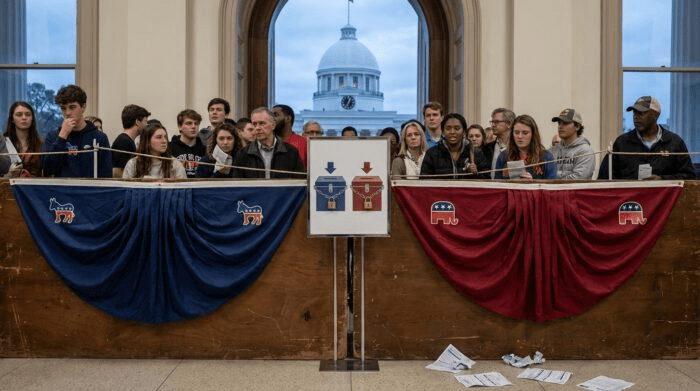
If you want to know how a state government dies, don’t look for a violent coup or a burning building. Look for a bored committee room in Montgomery on a Tuesday afternoon, where a handful of men in expensive suits are quietly rewriting the definition of “expertise.”
For the past week, while the national media hyperventilated over Chinese AI models and the latest White House drama, the Alabama Legislature has been executing a pincer movement on its own ability to govern. It is a dull, bureaucratic assassination, carried out via a slate of bills — SB71, SB167, and HB392—that sound like homework but act like hand grenades.
Together, they represent the final victory of the industrial lobby over the administrative state. They are the mechanisms of a new “Maga Swamp”—not of federal bureaucrats, but of local corporate impunity. The message these bills send to scientists, engineers, and public health experts in Alabama is unmistakable: Pack your bags. We don’t need you anymore.
The Ceiling: The “Trump Loophole”
The first jaw of the trap is Senate Bill 71, sponsored by Sen. Donnie Chesteen (R-Geneva).
On paper, the bill sounds like standard conservative “red tape” cutting. It prohibits Alabama state agencies—specifically the Department of Environmental Management (ADEM)—from adopting any environmental regulation stricter than federal standards.
If Washington doesn’t ban it, Montgomery can’t ban it.
This is a breathtaking surrender of sovereignty. For decades, the conservative refrain in this state was “States’ Rights.” The argument went that bureaucrats in D.C. didn’t know the difference between the Tennessee Valley and the Mobile Delta. Alabama needed the flexibility to set its own rules because Alabama’s ecology was unique.
SB 71 takes that philosophy and throws it into a blast furnace. It effectively outsources Alabama’s environmental baseline to the EPA.
Here is the kicker: We are currently living under a Trump administration that is aggressively slashing the EPA budget and rolling back federal protections. By tethering Alabama’s regulations to the federal floor, Chesteen isn’t just freezing standards; he is installing a trapdoor. When the Feds cut a regulation, Alabama automatically cuts it too. The state legislature doesn’t even get a vote. It is deregulation on autopilot.
Senate Minority Leader Bobby Singleton (D-Greensboro) saw the game immediately during the floor debate. “It’s going to help economic development because it’s going to let them do what they want to do,” he told Alabama Daily News.
He is right. If a chemical plant in Decatur wants to dump a specific solvent that the Feds haven’t gotten around to regulating yet; ADEM is now legally powerless to stop them unless they can prove “manifest bodily harm”—a nearly impossible legal standard.
The Double Standard: “We Like Our Coal”
You might think this is all about “liberty” and “free markets.” But look closer at what else happened this month, and the hypocrisy reveals itself.
While the legislature is busy deregulating “old” industries, they are rolling out the red carpet for coal while actively attacking the new energy economy.
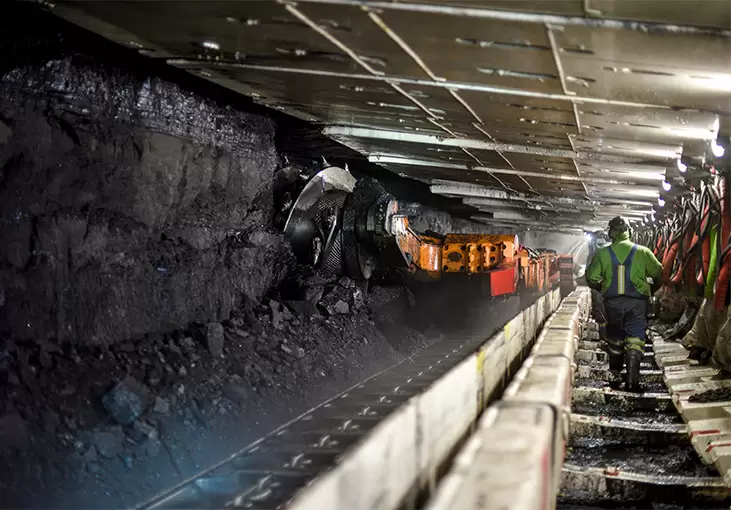
On January 15, 2026, the federal government finally approved the massive expansion of Warrior Met Coal’s Blue Creek mine in Tuscaloosa County, a move celebrated by Senator Tommy Tuberville as ending the “job-killing war on coal.” This opens up 53 million tons of carbon to be dug out of Alabama soil.
Contrast that warm embrace with the hostility shown to the tech sector. Just days ago, committees moved forward with Senate Bill 265 and Senate Bill 270, which slash tax incentives for data centers and force them to pay for their own grid upgrades.
Why the sudden change of heart? Why is “regulation” bad for a coal mine but essential for a server farm?
The answer lies in the Public Service Commission (PSC). Former PSC President Twinkle Cavanaugh has been explicit about the state’s bias, recently stating, “They [the EPA] know we like our coal.” The state’s power brokers are terrified that data centers—which often demand clean, solar energy—will force a modernization of the grid that threatens the coal-heavy status quo.
The Solar Penalty
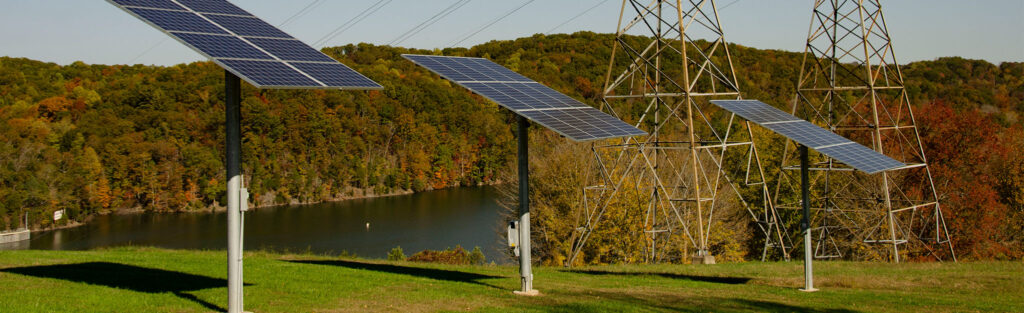
This hostility isn’t just aimed at massive data centers; it is aimed at your roof.
Alabama is arguably the most hostile state in the nation for residential solar. We rank 39th in total solar capacity—an abysmal statistic for a state that gets as much sun as we do. But this isn’t an accident of geography; it is a result of policy.
Alabama Power enforces a notorious “Capacity Reservation Charge”—often called the “Solar Tax”—on homeowners who connect solar panels to the grid. Currently set at $5.41 per kilowatt per month, this fee effectively wipes out the savings a family might see from generating their own power. If you install a standard 5kW system to lower your bill, Alabama Power automatically charges you an extra ~$27 a month just for the privilege, before you even flip the switch.
Furthermore, the state refuses to mandate “net metering,” the standard practice where utilities pay you the retail rate for the excess energy you send back to the grid. Instead, Alabama Power pays you a fraction of the cost (roughly 3 to 4 cents per kWh), while charging you full price (over 15 cents) to buy it back later.
The message to homeowners is clear: You are free to buy our expensive coal power, but you will be punished if you try to make your own.
The Power Grab: HB 392
To ensure this coal-friendly, anti-solar status quo can never be challenged, the legislature has one final card to play: House Bill 392.
Sponsored by Rep. Chip Brown (R-Hollinger’s Island), this bill would end the popular election of the Public Service Commission. Instead of answering to the voters, future commissioners would be appointed by the Governor and legislative leadership.
This is not a minor administrative tweak. It is a coup against your wallet.
Alabama residents currently pay some of the highest electricity bills in the entire country. We are captive customers of a monopoly that is notoriously opaque. Unlike almost every other state, Alabama Power has not faced a full, formal rate hearing—a standard public audit of its books—in over 40 years. Instead, the PSC uses a formula called “Rate Stabilization and Equalization” (RSE) that guarantees company profits while leaving customers in the dark about what they are actually paying for.
The result? Record profits for the utility, crushing bills for the residents, and zero transparency.
The only tool the public has to fight this is the ballot box. If the PSC approves another rate hike, you can technically vote them out. HB 392 destroys that tool.
By making the commissioners political appointees, Rep. Brown is ensuring that the PSC answers only to the Governor and the Speaker of the House—the very politicians whose campaigns are often funded by the utilities themselves. It is a perfect, closed loop of influence. The bill guarantees that the 40-year streak of no audits will continue indefinitely, and you will never again have the right to fire the people setting your power bill.
Although House leadership pulled the bill from the floor calendar on February 12 due to sudden public backlash, the intent remains clear. They are waiting for the heat to die down to lock in the “Alabama Power Grab” for good.
The Floor: The Death of Judicial Review
Finally, if any agency does try to stand up for the public, Senate Bill 167 cuts the floor out from under them in court.
Sponsored by Sen. Arthur Orr (R-Decatur), this bill ends “Chevron deference” in Alabama. It mandates that elected judges with no specialized scientific training must not defer to agency experts on technical matters. Instead, they are instructed to interpret laws in a way that “maximizes individual liberty.”
In practice, this means that if ADEM uses its expertise to fine a polluter, a judge is legally obligated to ignore that expertise and rule in favor of the corporation’s “liberty” to pollute, provided the law is even slightly vague.
The Zombie Agency
When you combine these bills, you don’t just weaken the state government; you zombify it.
We are facing a looming “Brain Drain” that will haunt this state for a generation. Why would any self-respecting hydrologist, structural engineer, or solar technician work for the state of Alabama in 2026?
- Under SB 71, you aren’t allowed to create rules to solve local problems.
- Under SB 167, your expert opinion is legally worthless in court.
- Under HB 392, your bosses are political appointees who can’t be voted out.
The result will be an exodus of competence. The experts will leave for the private sector, or they will move to states that still believe in math. The only people left in the regulatory agencies will be paper-pushers collecting a paycheck to oversee a graveyard of public policy.
The Winners and Losers
Who benefits from this dismantling of the state? Follow the money.
Warrior Met Coal, the heavy utilities, and the lobbying firms like Windom, Galliher & Associates are watching their wildest dreams come true. They have constructed a legal framework where the only “certainty” is that no one can stop them.
The losers are the people of Alabama. We are the ones who drink the water. We are the ones paying the highest electricity bills in the South to keep old coal plants burning.
This is how a government dies: not with a bang, but with a vote to ignore the experts. Welcome to the new Alabama. Open for business. Closed for science.
Citations and Resources
Alabama’s Solar Hostility & Policy Barriers
- Solar Energy Industries Association (SEIA):“State Solar Spotlight: Alabama”
- Key Finding: Ranks Alabama 39th in the nation for total solar capacity (as of Q3 2025 data).
- https://seia.org/state-solar-policy/alabama-solar/
- Center for Biological Diversity:“10 Sunny States Blocking Distributed Solar”
- Key Finding: Gives Alabama an “F” grade for solar policy, specifically noting it blocks distributed solar despite high technical potential.
- https://www.biologicaldiversity.org/programs/population_and_sustainability/energy/pdfs/ThrowingShade.pdf
- Energy Alabama:“The Alabama Solar Tax”
- Key Finding: Details the $5.41/kW monthly fee charged by Alabama Power on grid-connected solar systems.
- https://energyalabama.org/solar-tax/
Alabama’s High Energy Burden & Lack of Oversight
- Inside Climate News:“How Alabama Power Kept Bills Up and Opposition Out” (Nov 3, 2025).
- Key Finding: Confirms Alabama Power residential customers paid the highest total electric bills of any major utility in the country in 2024.
- https://insideclimatenews.org/news/03112025/alabama-power-electric-rates-profits/
- AP News:“Alabama utility commission allowed to hike prices behind closed doors” (July 9, 2025).
- Key Finding: Reports that there have been no public hearings on fuel costs in over 16 years.
- https://apnews.com/article/alabama-power-utility-rate-hikes-public-input-1096fac93db2e499bbafb4a074155468
Legislative & Permitting Documents
- News From The States: “Alabama House bill would end popular election of Public Service Commission” (Feb 10, 2026).
https://www.newsfromthestates.com/article/alabama-house-bill-would-end-popular-election-public-service-commission - Alabama Daily News: “Bill to make PSC appointed, not elected, stalls in House” (Feb 12, 2026).
https://aldailynews.com/bill-to-make-psc-appointed-not-elected-stalls-in-house/ - Federal Permitting Dashboard: “Warrior Met Coal Mines Project Completes Federal Permitting” (Jan 15, 2026).
https://www.permitting.gov/newsroom/press-releases/warrior-met-coal-mines-project-completes-federal-permitting

Bama Politics is committed to giving Alabama residents a voice.
This is an opinion column and does not necessarily represent or reflect the opinions of Bama Politics, its editors or its reporters.
The opinions are those of its author. Want to have your voice heard?
Send us a message through our opinion contact page.
Topic tags: