HB450 Alabama 2015 Session
Summary
- Primary Sponsor
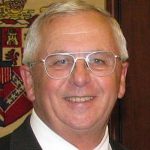 Dickie DrakeRepublican
- Session
- 2015 Regular Session
- Title
- Courts, circuit and districts, witnesses, video testimony authorize for members of Armed Services on active duty, requirements, Armed Services Accommodation Act, Sec. 12-21-135.1 added
- Summary
The bill lets Alabama courts allow two-way video testimony for active-duty military witnesses outside Alabama and for Alabama Department of Forensic Sciences staff, with the requesting party paying the costs.
What This Bill DoesIt creates the Alabama Armed Services Accommodation Act and a new section with definitions. It allows circuit or district courts to permit two-way video testimony for witnesses on active duty who are outside the state, and for forensic scientists to testify by video if all parties agree. For admissibility, the video testimony must be under oath, subject to cross-examination, and the party requesting the video must bear the related costs; the court is not required to provide equipment, and the testimony is recorded and governed by existing evidence rules.
Who It Affects- Active-duty military members who are summoned to testify in civil or criminal trials in Alabama but cannot attend in person, allowing them to testify by video instead.
- Employees and representatives of the Alabama Department of Forensic Sciences who may testify in civil or criminal trials in Alabama, potentially testifying by video with all parties' consent.
Key ProvisionsAI-generated summary using openai/gpt-5-nano on Feb 24, 2026. May contain errors — refer to the official bill text for accuracy.- Establishes the Alabama Armed Services Accommodation Act and adds a new section 12-21-135.1 with definitions for active duty, armed services, forensic scientist, and two-way video conference.
- Allows a circuit or district court to permit two-way video testimony for civil cases when the witness is on active duty outside Alabama, not physically present in Alabama, and absent due to official duty, with oath and cross-examination.
- Allows two-way video testimony in criminal cases with consent of all parties, under the same conditions as civil cases.
- Permits a forensic scientist to testify by two-way video conference in civil or criminal cases with consent of all parties, under oath and cross-examination.
- Specifies admissibility requirements for video testimony, including that all participants can see/hear the witness and that the witness can see/hear court proceedings and counsel; identifies who may be present with the witness (video tech, attorney, and others as the court allows).
- Assigns the cost of video testimony to the party seeking to introduce it; the court is not required to provide the equipment; testimony must be recorded and the oath can be given via video.
- Ensures video testimony is admissible only under applicable rules of evidence; sets the procedural framework but relies on existing evidentiary standards.
- Subjects
- Courts
Bill Actions
Indefinitely Postponed
Read for the second time and placed on the calendar
Read for the first time and referred to the House of Representatives committee on Judiciary
Bill Text
Documents
Source: Alabama Legislature