Karlapalem Opens House District 4 Campaign and Challenges Moore to Debates
Written by Brent Wilson on
April 6, 2026
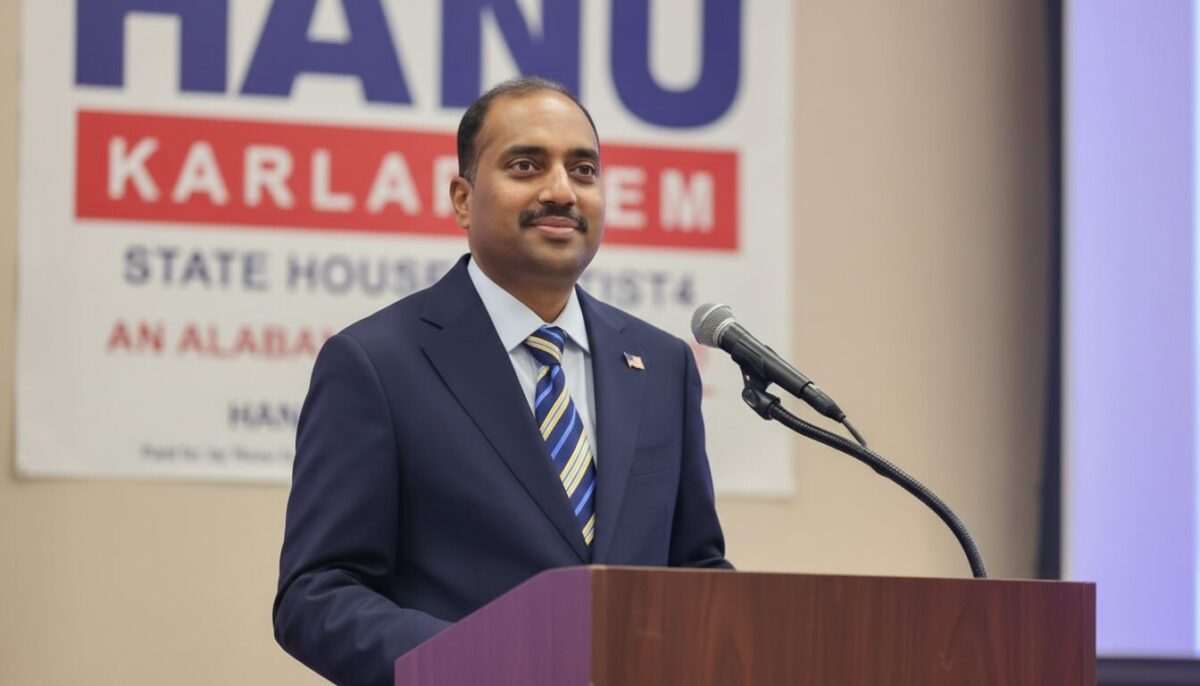
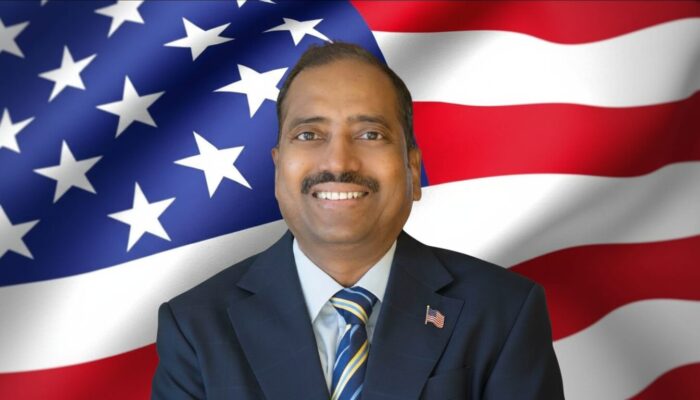
Hanu Karlapalem, the Democratic nominee for Alabama House District 4, opened his general election campaign Saturday in Madison and challenged incumbent Rep. Parker Moore, R-Decatur, to three debates across the district.
Karlapalem held the kickoff April 4 at the Best Western Plus on Madison Boulevard. His campaign said supporters attended from Limestone, Madison and Morgan counties, the three counties tied to District 4, and said the event was streamed online. A recording of the speeches is available here.
The contest is now set for the Nov. 3 general election after Karlapalem and Moore each advanced without opposition in their party primaries. Moore has represented the district for eight years, and Karlapalem is making his case as a challenger centered on education, voting rights and household costs.
Debate Challenge Sets an Early General Election Test
Karlapalem used the kickoff to issue a formal call for three debates, with one each in Limestone, Madison and Morgan counties.
Karlapalem said the format would give voters in each part of the district a chance to hear directly from both candidates before Election Day. He framed the request as a districtwide conversation about representation and legislative priorities.
Moore had not responded to earlier written correspondence from Karlapalem on legislative issues including SB21, according to Karlapalem’s campaign. The campaign announcement did not say whether Moore had accepted or declined the debate challenge as of the event.
Debates in Alabama legislative races are often less common than in statewide contests, particularly in districts where one party has held the seat for multiple terms. A three-county challenge would give both candidates repeated forums to discuss school funding, state constitutional questions and district-specific economic concerns.
For voters, the request also signals how Karlapalem intends to run the fall campaign. Rather than opening with biography alone, he tied his launch to a direct challenge to the incumbent and a public request for side-by-side discussion.
Campaign Focused on SB21 and Public Office Eligibility
Karlapalem spent a significant part of the event on SB21, which he described as a proposed constitutional amendment that would bar naturalized citizens from holding public office in Alabama.
He said more than 1,200 people had signed his petition opposing the proposal and said he plans to deliver those signatures to lawmakers when the Legislature returns from its Easter recess. A petition of that size does not carry legal force by itself, but it can serve as a public organizing tool and a way for a candidate to show support around an issue before lawmakers act.
Karlapalem’s criticism of SB21 was one of the clearest policy dividing lines he drew at the launch. He argued that the proposal conflicts with equal protection principles and said the question reaches beyond one bill to the broader issue of who can participate fully in public life.
Because the proposal would amend the state constitution, the process would be different from an ordinary law. Lawmakers would first have to approve it in the Legislature, and Alabama voters would then decide it in a statewide election. That means the issue could remain part of the campaign conversation even if the House District 4 race itself is decided on local turnout and district concerns.
Karlapalem’s emphasis on SB21 also reflects his own campaign identity. He is a Madison resident, a small technology business owner and a graduate of the University of Alabama in Huntsville, according to his campaign, and he has been active in civic and voting-rights work in North Alabama.
Education Emerges as Another Central Issue
Karlapalem also used the kickoff to criticize the CHOOSE Act, describing it as a shift of tax dollars from public schools to private schools. He said districts in House District 4 could lose about $100 million a year under that approach.
The campaign cast education as both a budget issue and an accountability issue. Karlapalem argued that public schools could lose funding while private-school spending would face less oversight.
In practical terms, that argument is aimed at families across the district who depend on local public schools and at voters who follow state budgeting decisions. School finance debates in Montgomery often turn on formulas and appropriations, but on the campaign trail they usually come down to a simpler question: whether state policy will strengthen neighborhood schools or redirect money elsewhere.
Karlapalem tied that message to other cultural and education-related disputes, including school anthem requirements that can trigger funding penalties and what he described as threats to public libraries. Taken together, his remarks suggest he plans to make education policy a broad statement about the role of public institutions, not just a line-item argument about state spending.
Moore, as the sitting House member, enters the race with an existing legislative record that Karlapalem is clearly trying to place at the center of the campaign. District voters are likely to hear more from both sides in the months ahead about how state education laws affect local schools in Madison, Limestone and Morgan counties.
Cost of Living and Health Care Round Out the Message
Beyond constitutional and education issues, Karlapalem argued that daily costs are shaping life in North Alabama. He pointed to Alabama’s local sales tax burden, the rising cost of doing business for small and family-owned companies, and changes in the regional health care market.
He specifically cited the $450 million acquisition of Crestwood Medical Center by Huntsville Hospital and argued that the deal would create a health care monopoly in North Alabama. Health care costs and competition can be difficult subjects in a legislative race because the policy levers are spread across state regulation, hospital management and insurance markets, but Karlapalem’s campaign is treating the issue as part of a larger affordability message.
That approach fits the slogan his campaign is using: Alabama families can afford, with lower costs, stronger public schools and access to health care. In a district that includes fast-growing parts of North Alabama, cost-of-living arguments can resonate across party lines even when voters disagree on social or constitutional issues.
Karlapalem also connected those concerns to small-business pressures. As a business owner, he is presenting himself as a candidate who can speak both to household budgets and to the operating costs facing local employers.
Launch Event Mixed Campaign Organization and Community Ties
The event also served as an introduction to Karlapalem’s campaign team and political network. Retired Lt. Col. Rod Herron emceed the program, and retired Lt. Col. Benard Simelton, the campaign chairman and former president of the NAACP Alabama State Conference, spoke about civil rights and voting rights.
Other speakers included Ken Hines, Diane Steele and Jocelyn Broer, each of whom emphasized turnout and local organizing. Broer said Karlapalem had been active in Madison civic issues and described him as someone willing to work across political lines.
Karlapalem’s wife, Vidya Karlapalem, was also recognized during the program. The campaign said she works as a senior software engineer in Huntsville and helped host the event.
Campaign rollouts often serve several purposes at once: raising money, showing volunteer strength, introducing endorsers and presenting a first general election message. Karlapalem’s kickoff followed that pattern, with appeals for volunteers, phone banking, door knocking and yard signs alongside his issue remarks.
He also said his fundraising has come from individual supporters rather than special-interest donors. That kind of claim is common in campaign messaging, and it gives candidates a way to describe both their donor base and the image they want to project to voters.
What the Race Could Turn On
House District 4 now has the basic shape of a traditional incumbent-versus-challenger contest, but the issues Karlapalem chose for his launch suggest he is trying to widen the conversation beyond standard party labels.
His message combined three threads: who gets to participate in government, how the state funds public schools and how families handle everyday costs. Each of those issues can play differently across the district’s counties and communities, giving the campaign several possible paths to engage voters.
Moore begins with the advantages that come with incumbency, including name recognition and a legislative record. Karlapalem, who does not currently hold office, is trying to use the general election period to define the race early and to push for a more visible campaign schedule through public debates.
The debate challenge itself may become a continuing issue if it remains unanswered. Even without immediate acceptance, the request gives Karlapalem a structure for arguing that voters in each county should hear from both candidates in person.
District-level House campaigns often receive less statewide attention than races for governor, Congress or the U.S. Senate, but they matter directly to how Alabama law is made. Members of the Alabama House vote on state budgets, criminal justice bills, education policy and constitutional amendments that later go to voters statewide.
That gives the House District 4 race relevance beyond one seat. A challenger can use the campaign to elevate issues being debated in Montgomery, while an incumbent can point to committee work, floor votes and constituent service.
What Comes Next Before November
With both running as unopposed in the primary, the House District 4 race moves into the long general election phase. Candidates typically spend that period building county-level volunteer operations, raising money, attending community events and sharpening contrasts on a smaller set of issues.
Karlapalem’s opening event suggests his campaign will continue to press on SB21, school funding and affordability. Any response from Moore on the debate challenge, or on those policy claims, would help define the next stage of the race.
For now, the campaign has established its opening frame: Karlapalem wants a series of public debates and a fall campaign focused on education, constitutional questions and the cost of living in North Alabama. Voters in District 4 will decide in November whether that message is enough to unseat an incumbent who has held the seat for the past eight years.