Deas Seeks Reinstatement to Veterans Forum and Threatens IRS Complaint
Written by Brent Wilson on
April 6, 2026
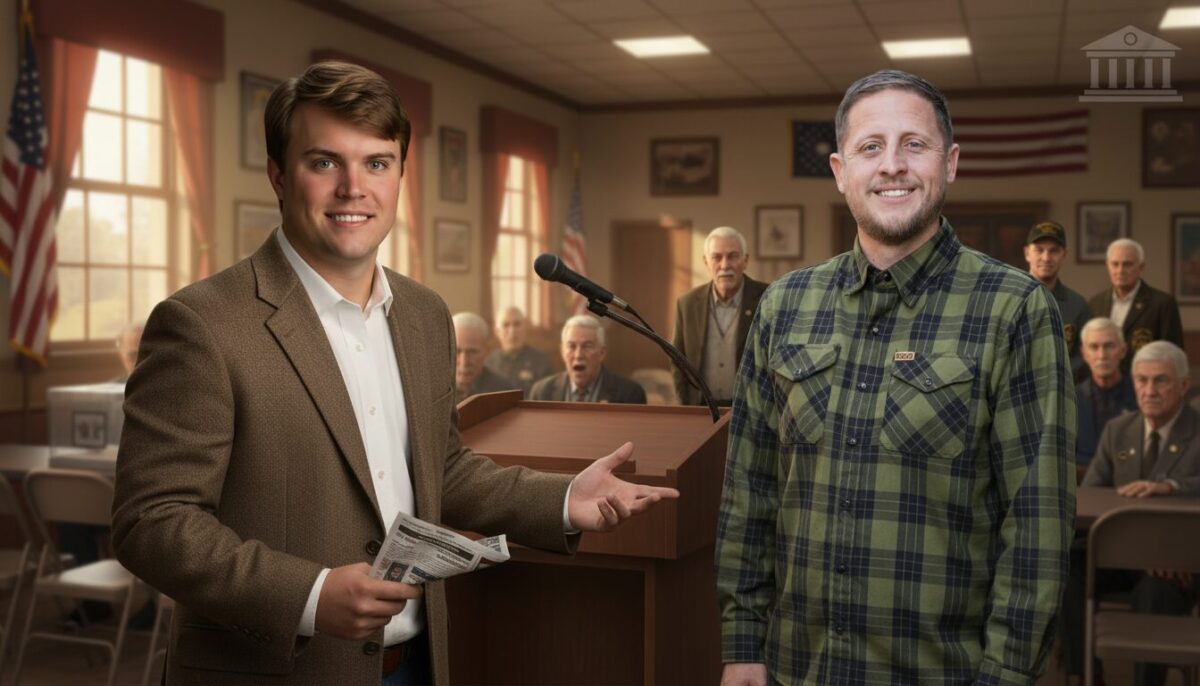
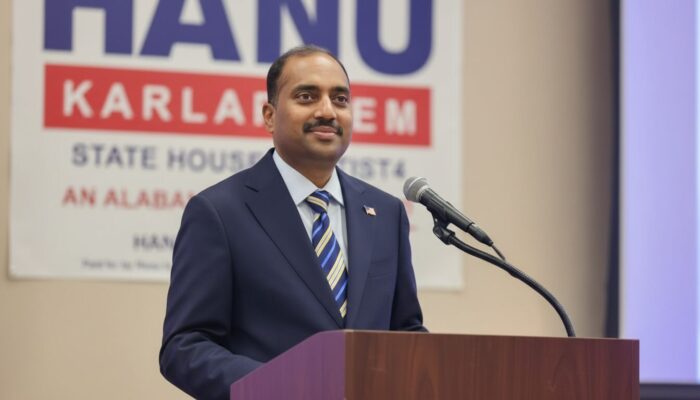
Republican U.S. Senate candidate Dale Deas of Mobile said he has sent a formal demand letter to Warrior Legacy Ranch and its board seeking reinstatement to a veterans candidate forum scheduled for April 7 in Spanish Fort, arguing the nonprofit cannot present the event as nonpartisan while excluding him from the program.
Deas said he gave the organization until 9 a.m. on the day of the event to confirm that he will be allowed to participate. If that does not happen, he said he plans to file a complaint with the Internal Revenue Service using Form 13909, a process used to report concerns about tax-exempt organizations.
The dispute adds another layer to the Republican contest in the 2026 Alabama U.S. Senate election, where the primary is set for May 19, 2026, and the general election is set for Nov. 3, 2026. The Republican field includes Jared Hudson of Fultondale, Attorney General Steve Marshall, U.S. Rep. Barry Moore, Seth Burton and Deas.
What Deas Is Alleging
In his letter, Deas said Warrior Legacy Ranch organized and promoted a Veterans Q&A Forum as a nonpartisan, issue-focused event for the veteran community. He said he had accepted an invitation to participate and was later told that invitation was being withdrawn.
Deas said the withdrawal came in an April 3 email from Patrick Jump, the executive director of Warrior Legacy Ranch, using the organization’s official email address. According to the email included with Deas’ letter, Jump told Deas the group had decided not to move forward with his participation because his recent public communications and the tone surrounding them might detract from the type of environment organizers were obligated to maintain.
Deas argues that the explanation was subjective and that organizers did not identify a neutral standard applied equally to all candidates. He also said the organization did not point to any false statement he had made when it revoked the invitation.
Deas further said Jump publicly endorsed Hudson on Feb. 15 in a Facebook post while serving as executive director of Warrior Legacy Ranch. A screenshot attached to Deas’ letter shows a post from Jump stating that he was proud to endorse Hudson for the U.S. Senate seat and describing him as a warfighter and a man of honor.
Based on that sequence, Deas said the organization’s decision to remove him while leaving Hudson on the program amounted to prohibited political activity by a 501(c)(3) charity. He is asking for reinstatement on equal terms, including equal speaking time, equal access to questions and equal opportunity to address the audience.
The Tax-Exempt Rules at Issue
The federal tax code gives 501(c)(3) charities tax-exempt status, but it also bars them from participating in or intervening in campaigns for public office. That restriction is broader than the rules that apply to some lobbying activity. In plain terms, charities can carry out educational work and community programs, but they cannot use the organization itself to support or oppose candidates.
Candidate forums can still be allowed under IRS guidance when they are conducted in a neutral way. Deas points to IRS Revenue Ruling 2007-41, which discusses how tax-exempt groups may host candidate events if they do so without showing favoritism and if candidates are given an equal chance to take part and present their views.
Deas’ letter leans heavily on that guidance. He contends that excluding one legally qualified candidate from a forum while a publicly endorsed rival remains on the program fails the equal-opportunity standard the IRS uses to judge whether a tax-exempt organization crossed into campaign activity.
He also argues that the use of the organization’s official email account matters because it ties the decision to the nonprofit itself rather than to a personal action by Jump. Deas said that point is important to both the organization’s tax status and to possible penalties for organization managers if regulators determine a violation occurred.
What the Letter Demands
Deas’ demands are narrow and procedural. He asks Warrior Legacy Ranch to restore his invitation to the April 7 forum on the same terms offered to other candidates and to confirm that decision in writing.
If the organization refuses, Deas asks for a written explanation identifying the specific, objective standard used to remove him and documentation showing that standard was applied the same way to Hudson and every other participant. He says that if those conditions are not met, he will ask the IRS to review the group’s actions.
The letter says Deas would include several items with any complaint, including Jump’s endorsement of Hudson, the April email withdrawing Deas’ invitation and promotional materials identifying the event as a nonpartisan forum. He also says he would ask the IRS to examine whether excise taxes should be imposed on the organization or its managers under federal law.
Federal regulators do not resolve those questions on the spot. A Form 13909 filing is a complaint process, not an immediate ruling. If filed, it would put the matter before the IRS for review under its rules governing exempt organizations.
The Forum and the Campaign
The event at the center of the dispute was described in the email to Deas as a Veterans Q&A Forum co-hosted by Warrior Legacy Ranch and the Gulf Coast Veterans Community Center. The email said organizers were committed to a strictly nonpartisan, respectful and issue-focused forum intended to provide veterans and military families with information and meaningful dialogue on issues surrounding them.
Deas says that stated purpose is exactly why the participation dispute matters. His argument is not simply that he lost a speaking slot, but that a tax-exempt organization billed the event as nonpartisan while removing one candidate after the organization’s executive director publicly backed another.
Campaign forums often occupy a careful place in election seasons. Community groups, business associations and nonprofit organizations regularly host them as a way for voters to hear from candidates in one setting. The value of those events depends in part on whether candidates are invited under clear rules and whether the host follows those rules consistently.
For voters, the practical issue is straightforward. A forum advertised for veterans and military families can serve as an opportunity to compare how candidates talk about veterans’ services, health care, benefits, military readiness and federal policy affecting former service members. Excluding a candidate changes what the audience hears and who gets access to that audience.
Broader Tensions in the Republican Primary
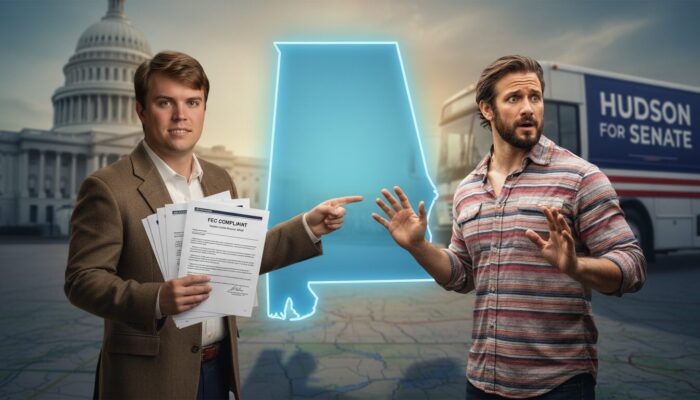
Deas’ challenge to Warrior Legacy Ranch comes as he has also been pursuing a separate line of attack involving Hudson’s campaign. We previously reported that Deas filed an FEC complaint against Hudson’s Senate campaign, adding to an increasingly procedural and records-based dispute between the two Republican candidates.
In his demand letter, Deas says his public statements about Hudson and Hudson’s campaign network are based on Alabama Secretary of State records, Federal Election Commission filings and published reporting. He says no one has answered those claims with what he describes as a counter-fact.
That language helps explain the reference in Jump’s email to Deas’ recent public communications. It also places the forum dispute inside a wider campaign argument over how candidates and outside organizations are responding to Deas’ criticism of Hudson.
Hudson remains one of several Republicans seeking the seat. With a May 19 primary and a large field, candidates are still competing for opportunities to reach voters through forums, endorsements and campaign appearances around the state. A veterans event on the Gulf Coast offers one such venue, particularly in a state where military service and veterans’ issues carry weight in Republican politics.
What Is Known From the Correspondence
The documents Deas released outline a clear timeline from his perspective. He says Jump publicly endorsed Hudson on Feb. 15, and he included a screenshot of that post with his demand letter. He then says Jump emailed him on April 3 to withdraw his invitation to the April 7 forum.
The email shown in the materials thanks Deas for his initial willingness to participate and says that after careful reconsideration, organizers would not move forward with his participation. It says the decision was made because his recent public communications and the tone surrounding them may detract from the environment organizers believed they were required to maintain for the event and the veteran community they serve.
Deas contends that rationale does not satisfy the kind of neutral, evenhanded standard that a nonprofit hosting candidates should use. He says the removal was tied to speech and advocacy in the campaign rather than to a rule applied across the field.
Warrior Legacy Ranch’s response, if any, is not included in the materials beyond the April 3 email. The organization’s board was copied on Deas’ legal demand, which was addressed to Jump and the board of directors.
What Happens Next
The immediate question is whether Warrior Legacy Ranch restores Deas to the April 7 event. If organizers reinstate him, the dispute may shift from access to the forum to whether either side takes further action after the event.
If the organization does not reverse course, Deas says he will file an IRS complaint. That would not produce an instant public finding, but it would move the dispute from campaign messaging into a federal administrative process that reviews whether tax-exempt groups followed the rules that come with that status.
The matter also carries a political dimension separate from any tax question. Forum access, endorsements and nonprofit boundaries all matter in a crowded primary, especially when candidates are trying to reach overlapping groups of Republican voters. Veterans-focused events can be especially visible because they combine public policy, community standing and local organizational networks.
As the Senate primary moves closer, the episode offers a reminder that campaign disputes do not always center on television ads or fundraising reports. Some turn on who is invited into the room, who sets the terms for public events and whether organizations that host candidates are meeting the standards they say they are following.
For now, Deas has put Warrior Legacy Ranch on notice and tied the outcome to a specific deadline on the morning of the forum. Whether he appears on stage in Spanish Fort, and whether the issue advances to the IRS, will determine the next step in a dispute that has already widened beyond one candidate event.