 Opinion
The Geometry Of Silence
Written by Garrett Rhodes on
May 13, 2026 | Opinion
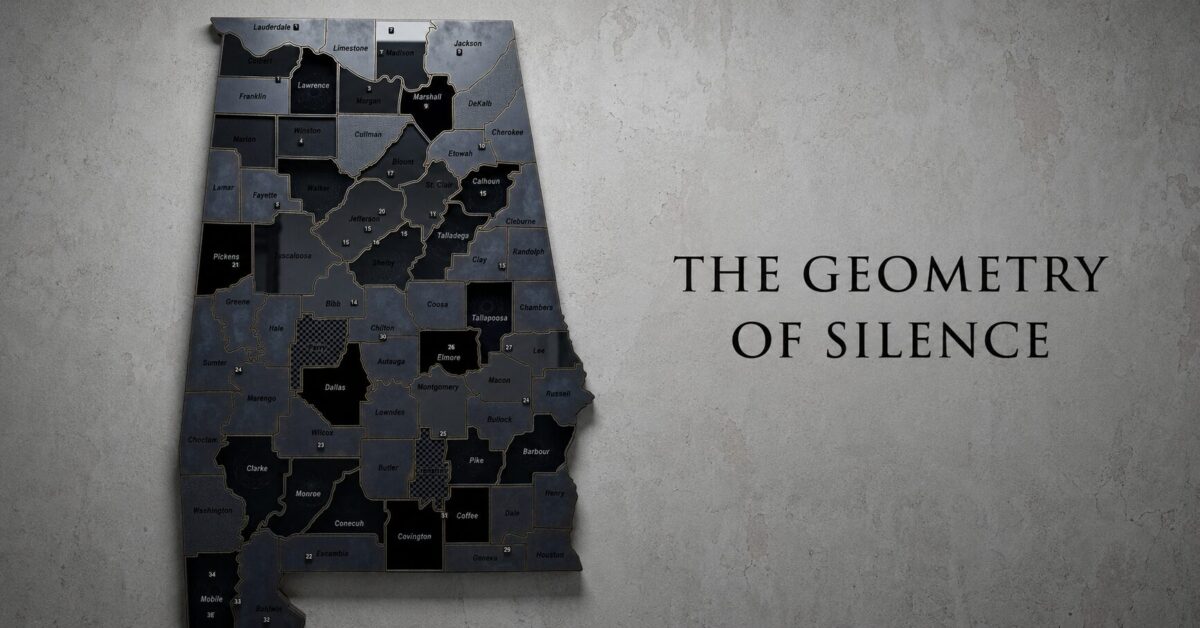
Democracy in Alabama is currently being treated like a high-stakes math problem where the goal is to make a specific group of people equal zero. On Wednesday, the Supreme Court didn’t just issue a ruling; they handed a sledgehammer to a state legislature that has spent the better part of a century trying to figure out how to ignore its own citizens. By striking down Louisiana’s congressional map as a “racial gerrymander,” the Court’s conservative supermajority effectively told Alabama that the brief window of fair representation opened in 2023 was a mistake they are now eager to correct.
This isn’t a dry debate over lines on a map. This is a targeted demolition of political agency. For a year, Alabama stood as a rare, flickering signal of what the Voting Rights Act was supposed to do. After decades of one-party strangleholds and “packing and cracking” strategies designed to dilute minority power, the state finally had two majority-Black districts. For the first time in generations, the math actually matched the people.
Then came the Louisiana decision. The message from D.C. was loud and clear: if you want to silence a minority population, just wrap your intentions in the flag of “colorblindness” and the Court will provide the legal cover.
The Art of the Disappearing Act
To understand what’s at stake, you have to look at the faces that are being marked for erasure. In 2023, the courts forced Alabama to create the 2nd Congressional District—an “opportunity district” that finally gave a voice to a massive swath of the state stretching from Mobile through the southern Black Belt into Montgomery. Shomari Figures currently holds that seat. His presence in D.C. isn’t just a win for the Democratic Party; it’s a logistical miracle for voters who have spent their lives being represented by people who don’t know their names or their needs.
Now, that miracle is on the chopping block.
Republicans in Montgomery, spurred on by the likes of Barry Moore and the state GOP, are salivating at the chance to redraft these lines. Their argument is a masterpiece of gaslighting. They claim that drawing districts to ensure minority representation is “unconstitutional” because it considers race. It’s a convenient logic: ignore the racial polarization that defines Alabama politics, ignore the history of systemic exclusion, and simply draw lines that happen—by total coincidence, of course—to ensure that a group making up nearly 30 percent of the state ends up with 14 percent of the power. Or less.
If the 2nd District is dismantled, we aren’t just losing a congressman. We are losing a direct line of communication for hundreds of thousands of people in the Black Belt who finally felt the government might actually be listening. When you “crack” these communities and fold them into massive, rural, white-majority districts, their specific concerns about healthcare, infrastructure, and agricultural equity don’t just get de-prioritized. They vanish.
The Black Belt’s Last Stand
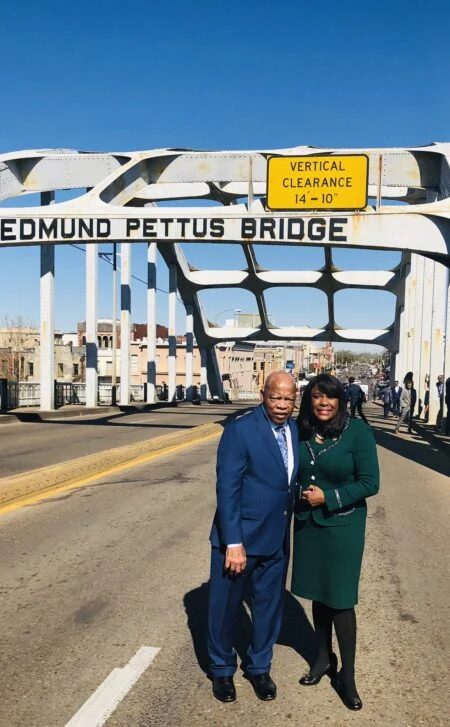
The 7th Congressional District is the oldest majority-Black district in the state. It encompasses Selma, Tuscaloosa, and parts of Birmingham and Montgomery. It is represented by Terri Sewell, a woman who has spent her career walking the same streets where the giants of the Civil Rights movement were beaten for the right to vote.
Sewell didn’t mince words after the ruling, calling it a “death sentence” for the Voting Rights Act. She’s right. The legal alchemy currently being practiced by the Court’s majority is designed to create a Catch-22. On one hand, Section 2 of the VRA says you can’t dilute minority votes. On the other hand, this new ruling says if you try to fix that dilution by looking at where those voters actually live, you’re guilty of a “racial gerrymander.”
It’s a rigged game. If the GOP gets its way this summer, the 7th District could be packed even tighter or stripped of its vital connections to the state’s urban centers, further isolating the voices of Black Alabamians. The goal isn’t “fairness” or “communities.” The goal is a 6–1 or even a 7–0 Republican delegation in a state where nearly one out of every three people is a minority. That isn’t representation; it’s a blockade.
The Rush To The Meat-Grinder
While the legal scholars argue over footnotes, the political opportunists are checking their watches. The Alabama primaries are set for May 19. Under any normal standard of judicial stability, you don’t mess with the plumbing of an election three weeks before the water starts running. But the calls for Governor Kay Ivey to call a special session are reaching a fever pitch.
Former Congressman Mo Brooks and others are framing this as an emergency. They know that if they can force a redraw now—or create enough chaos to delay the 2026 cycle—they can catch their opponents off guard. It is a strategy of “administrative violence.” By changing the rules mid-game, they ensure that the only people who can navigate the new system are the ones who built it.
The human cost of this chaos is calculated. Every time a map is redrawn at the last minute, voter confusion skyrockets. People show up to the wrong polling places; they find candidates on their ballots they’ve never heard of; they stop believing that their vote has any mechanical impact on the outcome. This isn’t a bug in the GOP’s plan; it’s a feature. Disillusionment is the most effective form of voter suppression ever invented.
The “Colorblind” Smokescreen
The most dangerous part of this moment is the rhetoric being used to justify it. When Barry Moore talks about drawing districts “the right way, fair, constitutional, and representative of our communities,” he is using the language of equality to achieve the results of Jim Crow.
In Alabama, “representative of our communities” has historically been code for ensuring that the white majority remains the sole arbiter of political will. By claiming that race should never be a factor in redistricting, they are asking us to ignore the fact that race is the primary factor in how people live, where they go to school, and how they are treated by the state.
To be “colorblind” in Alabama redistricting is to be intentionally blind to the reality of the people who live here. It is a way to bake discrimination into the very geometry of our districts and then throw up your hands and say, “The computer drew it that way.”
A State On Borrowed Time
Alabama is currently 26.8 percent Black. Under the current, fair map, the state has two majority-Black districts out of seven. That is 28.5 percent representation. It is the most accurate reflection of the state’s population in its 200-year history. It is, by any objective data-driven metric, the definition of a “fair” map.
The attempt to destroy that map is an attempt to return to a version of Alabama where the Black Belt is a political ghost, where the urban centers are silenced by rural weight, and where the “will of the people” is something that can be managed and massaged by a small group of men in a room in Montgomery.
The Supreme Court has given the state legislature the matches. If they light the fire this summer, it won’t just be the maps that burn. It will be the last shreds of faith that a huge portion of this state has in the democratic process. When you tell a third of your population that their voices are a “legal error” to be corrected, don’t be surprised when the silence they leave behind starts to sound like a warning.
Citations and Resources
- Alabama Republicans Push for New Congressional Map After Seismic Supreme Court Ruling (AL.com) https://www.al.com/politics/2026/04/alabama-republicans-push-for-new-congressional-map-after-seismic-supreme-court-ruling-its-time-to-act.html
- The Supreme Court’s Seismic Shift on Racial Gerrymandering (Election Law Blog – Rick Hasen) https://electionlawblog.org/?p=142981
- Supreme Court Sides with Republican Challenges to Louisiana Maps (Associated Press) https://apnews.com/article/supreme-court-louisiana-redistricting-voting-rights-8f9218a5e01c
- Terris Sewell Responds to SCOTUS ‘Death Sentence’ for VRA (Official Statement – U.S. House) https://sewell.house.gov/media-center/press-releases/sewell-statement-supreme-court-ruling-louisiana
- Understanding the Purcell Principle and Late-Stage Election Changes (ProPublica Archive) https://www.propublica.org/article/purcell-principle-supreme-court-voting-rights
- Alabama’s 2026 Election Calendar and Redistricting Deadlines (Alabama Secretary of State) https://www.sos.alabama.gov/alabama-votes/voter/election-dates

Bama Politics is committed to giving Alabama residents a voice.
This is an opinion column and does not necessarily represent or reflect the opinions of Bama Politics, its editors or its reporters.
The opinions are those of its author. Want to have your voice heard?
Send us a message through our opinion contact page.